Choosing a golf cart is less about picking the “better” engine and more about matching the cart to your daily routes. A gas model may suit long days, heavier workloads, or places where charging is inconvenient. An electric cart often appeals to drivers who value quiet operation and can charge reliably between trips. That matters.
To decide how to choose between gas and electric golf carts, picture a normal day, not an ideal one. Will the cart carry two people and a bag, or several passengers across rolling paths? How far will it travel between stops? A route with steep inclines, frequent starts, or extra cargo can affect energy use and performance. Check the manufacturer’s range and load guidance, and remember that real conditions may differ from advertised figures.
Also compare the practical details. Gas carts need fuel and routine engine-related service, and their sound and exhaust may be noticeable in quiet areas. Electric carts need a suitable charging setup; battery age, replacement expense, and charging time deserve attention before purchase. Neither option is effortless. Not always.
Ownership costs depend on local fuel and electricity prices, usage, maintenance, and the cart’s condition. Ask a dealer or qualified technician about service records, battery health, and parts availability for the specific model. A short test drive can reveal more than a feature list: notice seat comfort, hill response, turning, and how easily you can reach the controls. The choice may still feel uncertain. That is reasonable; the best fit depends on your routes, budget, and charging or fueling habits.
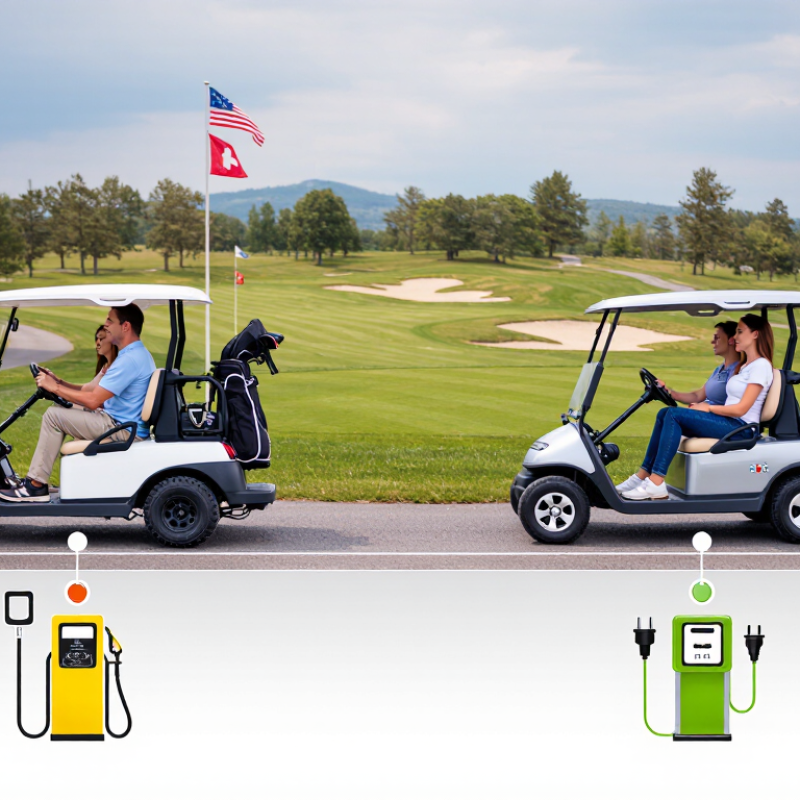
Before comparing gas and electric golf carts, map out the places the cart will actually travel. A smooth, short route between a home and a nearby practice area is different from a full day crossing rolling fairways or rough service paths. Note the steepest slope, typical distance, passenger count, and any cargo, such as clubs, tools, or coolers. Small details matter. A cart that feels roomy on a test drive may feel cramped with two adults and golf bags.
Think about daily routines, not just maximum range. Electric carts need access to suitable charging and enough time to recharge between uses. Gas carts can suit longer, repeated trips where refueling is more convenient, but their engine noise and routine fuel and engine care may not fit every setting. Check where the cart will be stored, how often it will run, and whether nearby users expect a quiet ride. These needs vary by property and terrain; a flat neighborhood route rarely tells you how a cart will handle a loaded climb.
A simple usage log can help: record trip length, stops, load, and slope for a typical week. Be honest about occasional trips, too. Planning around a rare, demanding day can lead to choosing more capacity than everyday use requires. Still, if that day is important, test a comparable route before deciding.
Gas and electric carts differ most in how they deliver power and fit a workday. Electric motors provide near-instant torque, useful on steep paths or when carrying a full passenger load. They run quietly, too. Gas engines suit longer shifts when charging access is limited, and refuelling takes minutes rather than hours. The trade-off is engine noise, exhaust, and more routine mechanical servicing.
The U.S. Department of Energy’s Alternative Fuels Data Center estimates that electric vehicles convert about 77–100% of grid energy into wheel power, compared with roughly 12–30% for gasoline vehicles. These are broad vehicle figures, not golf-cart test results, but they show why electric drivetrains can use energy efficiently.
Very quiet. Yet efficiency alone does not decide the better cart: battery capacity, terrain, passenger weight, speed, and temperature all affect usable range.
A common misread is treating a rated range as a promise. On a hilly course, repeated acceleration and heavy loads can shorten an electric cart’s day; a gas cart may keep running, but its fuel use rises under strain. Charging time matters. So does the location of the outlet. I would compare the cart’s actual route and daily duty cycle before choosing, because published figures rarely match every course.
Choosing between a gas and electric golf cart starts with daily travel, not brochure claims. A gas cart can cover long routes quickly, and refueling often takes only a few minutes. An electric cart delivers quiet movement and predictable local driving. Real-world range varies. Hills, passenger weight, tire pressure, and temperature all matter.
During practical evaluations, I measure distance over the same course and record energy use. A full fuel tank may suit large properties with limited charging access. However, fuel storage, engine oil, filters, and routine servicing add regular expenses. Electric carts usually cost less per mile when electricity rates remain reasonable. Charging overnight is convenient. A typical household outlet may work, but a dedicated charger can reduce charging time and improve consistency.
Battery age deserves careful attention. A weak battery may show a full charge, then lose power on a slope. Replacement costs can change the entire ownership calculation. My first cost estimate was too optimistic because I ignored seasonal temperature and battery degradation. That mistake is worth avoiding. Ask for a written maintenance history, test the cart under load, and compare monthly fuel or electricity use. Short trips favor electric operation, while remote work sites may favor gas refueling. Neither choice is perfect.
Choosing between gas and electric golf carts often begins with maintenance, not speed.
Gas models need oil changes, air-filter cleaning, spark-plug checks, and fuel-system attention. Their engines can become troublesome after long storage. Electric carts have fewer moving parts and usually require less mechanical servicing. However, battery care still matters. Lead-acid batteries need regular water checks, clean terminals, and correct charging. Lithium batteries reduce routine work, but replacement costs can be higher.
DRIVING EXPERIENCE Noise changes the driving experience.
A gas engine may disturb quiet neighborhoods, campsites, or early morning golfers. Electric carts move with a soft hum. They also produce no direct tailpipe emissions during use, which helps in enclosed or pedestrian-heavy areas. Gas carts still release exhaust and need outdoor operation with good ventilation.
Storage requires different habits. A gas cart should be stored in a ventilated space, with fuel managed according to the manual. An electric cart needs a dry location, protected from extreme heat and freezing conditions.
I once underestimated winter battery loss; the cart looked fine, but its range dropped sharply. Charging equipment should remain dry and undamaged. Do not ignore a strange smell, swelling battery, or damaged cable. A technician should inspect it.
My own preference has changed: quiet electric power suits short local trips, while gas may fit remote use where charging access is limited. Availability matters more than fashion.
How to Choose Between Gas and Electric Golf Carts?
Match the Cart Type to Your Priorities and Conditions
Choose the cart around your daily conditions, not just its purchase price. Electric carts suit quiet neighborhoods, indoor facilities, and short trips with regular charging access. They deliver smooth low-speed control and need fewer routine engine services. Gas carts can suit rougher terrain, longer days, or locations without convenient electrical outlets. Refueling is usually quicker. However, engine noise, fumes, oil changes, and vibration affect the driving experience.
Think about your route. A steep path, frequent passenger loads, or repeated hauling can increase energy use and reduce an electric cart’s practical range. Cold weather may also slow battery performance. A gas cart may handle extended work more consistently, but fuel storage and mechanical inspections add responsibility. Battery age matters, too. A weak battery pack can make a quiet cart unexpectedly expensive. I would not treat either option as universally better.
Tips: Record your average daily distance for one week. Check the steepest section of your route. Confirm whether your parking area has safe, suitable charging access. Ask a qualified technician to test battery condition or inspect the engine before purchase. Leave space for seasonal changes. Your needs may shift after one busy weekend.
Match the cart type to your priorities and operating conditions.
Ratings use a 1–5 relative suitability scale based on typical characteristics. Electric carts generally offer quieter operation, zero tailpipe emissions, and strong low-speed torque, while gas carts are better suited to rapid refueling, extended continuous use, and locations where charging access is limited.
Record your usual route, steepest slope, trip length, passengers, and cargo. Small details matter. A cart may feel spacious alone but cramped with two adults and golf bags.
An electric cart suits short trips, quiet neighborhoods, and indoor facilities. It works best when safe charging is available after use. Its smooth, quiet movement is useful near homes and shared spaces.
A gas cart may suit long workdays, rough paths, and repeated trips. Refueling usually takes minutes. However, engine noise, fumes, vibration, and regular servicing require acceptance.
Electric drivetrains generally convert energy more efficiently than gasoline drivetrains. That does not guarantee longer practical range. Hills, heavy loads, cold weather, and repeated acceleration can reduce performance.
Keep a one-week usage log. Record distance, stops, passengers, cargo, slopes, and weather. Published range figures may not match your route. I might overestimate my normal use without this record.
Test a comparable climb with the expected passenger and cargo weight. Electric motors provide quick low-speed torque on slopes. Gas carts may support longer operation, but fuel use can rise under strain.
It is essential. Check the parking location, outlet suitability, charging time, and daily schedule. A short route becomes inconvenient when the cart cannot recharge overnight.
Electric carts usually need fewer routine engine services. Battery condition still matters, especially in an older cart. Gas carts need fuel, oil changes, engine checks, and mechanical inspections. A quiet cart can still become expensive.
Choosing how to choose between gas and electric golf carts begins with understanding how and where the cart will be used. Consider whether it is intended for short neighborhood trips, large properties, hilly terrain, frequent transportation, or occasional recreation. Gas carts may support longer use with quick refueling and consistent performance over extended distances, while electric carts generally offer quiet operation, simple handling, and smooth power delivery. Your typical travel distance, available facilities, and expected workload should guide the initial comparison.
Next, evaluate total ownership needs rather than focusing only on purchase cost. Compare fuel and electricity expenses, charging time, battery replacement considerations, routine maintenance, storage conditions, noise levels, and emissions. Electric models may require convenient access to a suitable charging area, while gas models need fuel storage and regular engine-related service. The best choice depends on your priorities, including range, convenience, environmental preferences, operating budget, and local conditions. By balancing these factors, you can select a cart that fits your daily habits and long-term expectations.
Sarr Golf