Golf cart owners often ask, “how long does a golf cart battery last?” The honest answer depends on battery type, driving habits, charging routines, and storage conditions. A well-maintained lead-acid battery commonly lasts three to five years. Lithium batteries may reach eight to ten years, although their higher purchase price changes the long-term calculation. These figures are useful guides, not promises.
Daily course operation can shorten battery life. Frequent hills, heavy loads, hot weather, and deep discharges place extra stress on each battery. A cart carrying four passengers up a long slope works much harder than one traveling on flat pavement. In practical service checks, weak acceleration, reduced driving range, slow charging, and swollen battery cases often signal trouble. Corroded terminals can create similar symptoms. The cause is not always obvious.
Maintenance matters. Flooded lead-acid batteries need correct water levels, clean terminals, and regular charging after use. Distilled water should be added only after charging, unless the manufacturer states otherwise. Lithium systems require compatible chargers and careful attention to battery-management warnings. Leaving any battery empty for weeks can cause permanent damage.
A neat number can mislead.
Battery age alone does not tell the full story. A three-year-old battery used gently may outperform a newer battery that was repeatedly neglected. Checking voltage, load performance, and service records gives a more reliable assessment. This guide explains the warning signs, maintenance habits, replacement costs, and realistic factors affecting golf cart battery life. It also examines why advertised lifespans sometimes differ from everyday results.
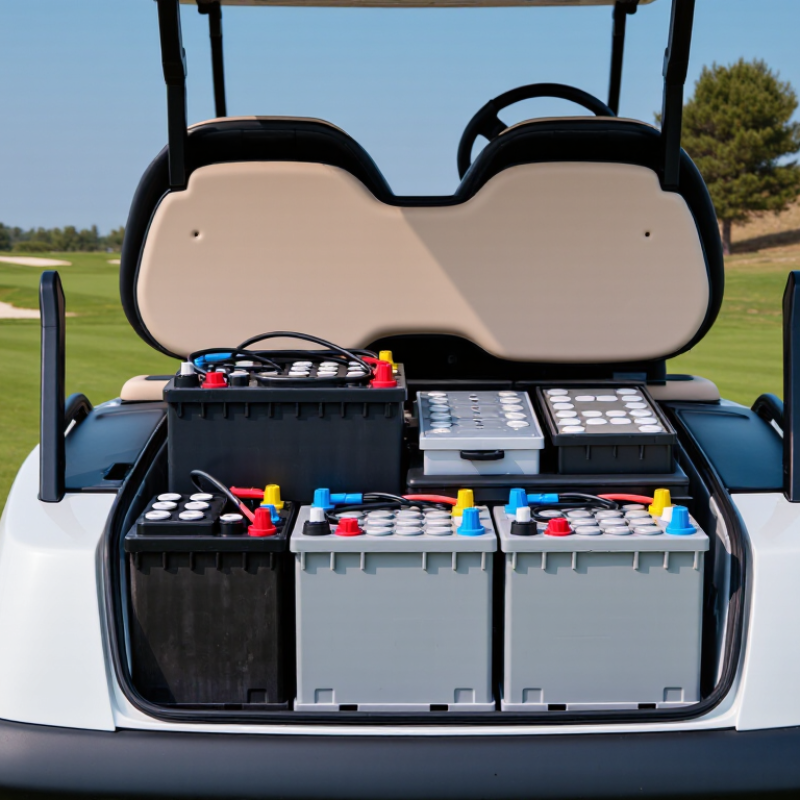
How Long Does a Golf Cart Battery Last?
Golf Cart Battery Lifespan by Battery Type
Golf cart battery life depends heavily on battery chemistry, charging habits, driving distance, and storage conditions. Flooded lead-acid batteries commonly last four to six years with regular watering and proper charging. Their cases need inspection, and electrolyte levels should never fall below the recommended mark. A neglected battery may lose useful capacity much earlier.
AGM lead-acid batteries usually last four to seven years. They require less maintenance because they are sealed, but they still dislike deep discharges and extreme heat. Lithium-ion batteries often provide eight to twelve years of service. They are lighter and charge efficiently, although their lifespan depends on battery management systems, charging temperature, and cycle frequency. Higher purchase costs can be offset by reduced maintenance and longer usable capacity.
Real conditions matter more than brochure numbers. A cart used daily on hills may wear batteries faster than one driven occasionally on flat paths. Leaving a lead-acid battery empty for several weeks can cause permanent damage. That mistake is surprisingly common. Charging immediately after use usually helps, but constant partial charging can still complicate performance testing. Technicians should check resting voltage, load performance, terminal condition, and charging behavior before declaring a battery finished. A battery can show normal voltage and still collapse under load. Lifespan estimates are useful guides, not guarantees.
Many batteries last three to six years. Actual life depends on chemistry, charging, workload, heat, and maintenance. Some fail earlier. Others last longer with gentle use.
Recharge the battery after normal use. Avoid leaving it deeply discharged for several days. Use a charger matched to the battery type. Do not wait until the pack is completely flat.
Check the water level after charging. Add distilled water when needed. Do not overfill. Keep the battery case and surrounding area clean and dry.
Yes. High temperatures speed up battery aging. Charge in a shaded, ventilated area. Two hot summers may reduce capacity when maintenance is ignored. That warning is easy to underestimate.
Not always. Cold conditions can temporarily reduce driving range. Warmer temperatures may restore some performance. Test the battery before deciding it needs replacement.
They can. Steep hills require more electrical power. Heavy passengers and extra equipment increase energy demand. Frequent stops also add stress. Flat paths are gentler.
Voltage alone can mislead. A weak battery may appear normal while resting. Under load, its voltage can collapse quickly. A technician should test voltage, load performance, and battery balance.
Store the cart with a healthy charge, not an empty battery. Check the voltage monthly during long storage. Keep the storage area cool and ventilated. Storage advice varies slightly by battery type.
Yes. Corrosion creates resistance and wastes energy. Clean terminals carefully and tighten loose connections. Inspect cables for cracks, swelling, or damage. Small details matter.
No. Maintenance cannot repair damaged plates or major capacity loss. It may prevent avoidable wear. Replacement becomes necessary when testing confirms serious failure. That judgment is not always obvious.
How long does a golf cart battery last depends largely on its battery type, usage, charging habits, and maintenance. Lead-acid batteries commonly provide several years of service when properly cared for, while newer lithium-based batteries may last longer and require less routine upkeep. Frequent driving, heavy loads, steep terrain, extreme temperatures, incomplete charging, and poor storage conditions can all reduce battery life.
Common warning signs of a failing golf cart battery include shorter driving range, slower acceleration, reduced power on hills, visible corrosion, swelling, leaking, or unusual charging behavior. To extend performance, keep batteries clean and securely connected, follow the correct charging routine, check fluid levels when applicable, avoid deep discharge, and store the cart in a suitable environment. Replacement is usually necessary when the battery can no longer hold a useful charge, performance drops significantly, or maintenance and repairs become impractical. Regular inspections can help identify problems early and prevent unexpected interruptions.

 Sarr Golf