2026 Top Utility Carts vs Golf Carts What Is the Difference?

Time:2026-10-09 Author:Isabella
0%

What is the difference between utility carts and golf carts? The answer begins with their intended work. Golf carts move passengers across smooth, controlled surfaces. Utility carts carry tools, materials, and sometimes heavier loads across farms, campuses, resorts, and industrial sites.

The distinction is practical. A golf cart usually has two or four seats, a compact rear platform, modest ground clearance, and predictable handling on paved paths. A utility cart often includes a steel or composite cargo bed, stronger suspension, higher payload capacity, and tires designed for gravel, grass, or uneven ground. Some models also offer four-wheel drive, hydraulic dumping, enclosed cabs, and towing equipment. That extra capability can increase weight, price, maintenance, and energy use. Not every buyer needs it.

Bill Yeargin, CEO of Textron Specialized Vehicles, has described the changing market by saying, “Golf cars are becoming a part of the way people live, work and play.” His observation helps explain today’s overlap. Modern golf carts can serve neighborhoods and facilities, while utility carts can transport people comfortably.

Market research reflects this expansion. Fortune Business Insights reported continued growth in the global golf cart market, supported by tourism, recreation, hospitality, and transportation applications. Grand View Research also identified rising demand for electric models, especially where operating noise and emissions matter. These reports show momentum, but they do not make every cart suitable for every job.

A quiet resort path is one environment. A muddy field is another. This guide compares payload, range, terrain performance, safety equipment, service needs, and total ownership cost. The categories overlap. That is where buyers can make expensive mistakes.
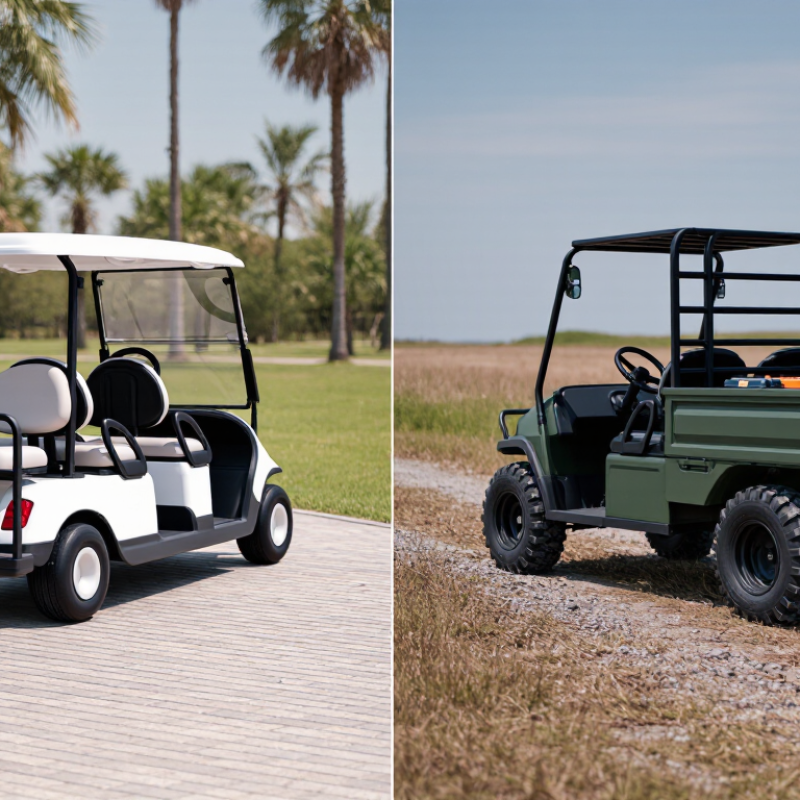
2026 Top Utility Carts vs Golf Carts What Is the Difference?

What Are Utility Carts and Golf Carts?

2026 Top Utility Carts vs Golf Carts: What Is the Difference?
What Are Utility Carts and Golf Carts?

Utility carts and golf carts share small frames, low-speed drivetrains, and compact turning circles. Their working purposes differ. A golf cart mainly carries two to six passengers across courses, resorts, campuses, or private communities. It usually provides seats, a roof, and limited storage. A utility cart replaces some passenger seating with a rear cargo bed, side rails, or tool compartments. That layout suits farms, warehouses, maintenance crews, and event grounds.

The numbers explain the demand. The National Golf Foundation reported about 45 million Americans played golf on or off course in 2023. That supports strong passenger-cart use, but it does not define every low-speed vehicle. Grand View Research estimated the global golf cart market at about USD 1.6 billion in 2023. Utility carts often carry roughly 500 to 1,000 pounds, depending on their frame and axle design. These figures are market indicators, not universal specifications.

A golf cart feels like a moving bench. A utility cart feels more like a small work truck. Electric models can reduce local noise, although battery weight affects payload and range. Buyers should check the rated load, braking system, ground clearance, battery type, and approved operating areas. A cargo bed may look strong but still have a modest limit. That detail is easy to miss. Road access also depends on local rules, equipment, and registration requirements, so a cart designed for a course should not be assumed road-ready.

Sources: National Golf Foundation, 2024 golf participation data; Grand View Research, Golf Cart Market Size Report, 2024.

How Utility Carts and Golf Carts Differ in Design and Purpose

Utility carts and golf carts may share four wheels, but their designs answer different questions. A golf cart is built to carry players and clubs quietly across maintained courses. Its compact body, smooth suspension, low step-in height, and rear-facing seats favor comfort and maneuverability. A utility cart prioritizes work. It may use a reinforced bed, stronger brakes, higher ground clearance, and attachment points for tools or materials. Different jobs. Different priorities.

The National Golf Foundation reported about 16,000 golf facilities worldwide in its 2024 industry overview, supporting continued demand for specialized course transportation. Market estimates also show strong interest: Grand View Research valued the global golf cart market at approximately $1.7 billion in 2023. These figures describe golf-focused vehicles, not every work-oriented cart. That distinction matters. Utility carts serve farms, campuses, warehouses, resorts, and maintenance teams. Their value often comes from payload capacity, range, and durability rather than passenger comfort.

In practical use, imagine a golf cart carrying two players and bags over smooth turf. Now picture a utility cart hauling soil across uneven ground after rain. The second task needs different tires, gearing, and body protection. Electric models can reduce local noise and routine emissions, yet battery weight may limit payload or range. The boundary is not perfectly clean. Some utility carts include seats, while some golf carts carry small loads. Buyers should measure terrain, cargo weight, daily distance, and charging access before choosing. A comfortable vehicle can still be the wrong work tool.

2026 Top Utility Carts vs Golf Carts: What Is the Difference?

Utility carts and golf carts may share similar low-speed layouts, but their designs serve different priorities. This chart uses a representative 0–100 comparison index based on common category specifications and typical use cases.

Utility carts: Designed for hauling tools, materials, and equipment. They commonly provide higher payload capacity, integrated cargo beds, stronger suspension, and greater ground clearance.
Golf carts: Designed primarily for quiet passenger transport on golf courses and private properties. They typically emphasize seating comfort, compact dimensions, smooth handling, and maneuverability.
Important note: Actual capacity, speed, seating, road equipment, and dimensions vary by configuration. The comparison index is intended to show design priorities rather than universal specifications.

Utility Cart vs Golf Cart: Comparing Power, Capacity, and Performance

2026 Top Utility Carts vs Golf Carts: What Is the Difference?

Utility Cart vs Golf Cart: Comparing Power, Capacity, and Performance

Utility carts and golf carts may share similar frames, but their working roles differ. A utility cart usually offers stronger hauling ability, larger cargo beds, and higher payload ratings. It can carry tools, soil, feed, or maintenance equipment across uneven property. Golf carts prioritize passenger comfort, compact handling, and quiet movement on smooth paths.

Power depends on the motor, battery system, gearing, and load. A utility model may deliver stronger low-speed torque for ramps or heavy trailers. However, extra power can increase energy use and tire wear. Golf carts often feel quicker when lightly loaded. They may struggle when carrying several passengers uphill.

Capacity needs careful checking. Measure the cargo bed, not just the advertised payload. A full bed of wet mulch can become surprisingly heavy. Confirm seating limits, braking performance, ground clearance, and turning space before choosing. Real performance changes with tire pressure, battery age, weather, and slope.

A simple test helps.

Drive both vehicles over the same incline with equal weight. Record acceleration, stopping distance, battery usage, and steering effort. Numbers reveal more than showroom impressions. Still, one test cannot represent every property. That assumption can be wrong. A utility cart may be excessive for short passenger trips, while a golf cart may feel underbuilt for daily hauling. Check the manufacturer’s specifications and have a qualified technician inspect used batteries, brakes, and suspension.

Which Vehicle Fits Different Work, Travel, and Recreational Needs?

2026 Top Utility Carts vs Golf Carts: What Is the Difference?

Choosing between a utility cart and a golf cart depends on the work, travel, or recreation you expect each day. Utility carts usually carry heavier loads, larger tools, and bulky materials. Their rear beds may handle soil bags, coolers, or maintenance equipment. Stronger suspension and higher ground clearance help on uneven paths. However, extra capacity can reduce comfort and battery range.

Golf carts focus more on people and smooth movement. They commonly offer two or four seats, simple controls, and compact dimensions. This makes them practical for resorts, large properties, short neighborhood trips, and casual outdoor travel. A golf cart may feel easier to park, but its limited cargo space becomes frustrating during serious work. It is not a small truck.

Before buying, inspect the payload rating, braking system, tire design, turning space, and charging requirements. Match the vehicle to your actual terrain, not an ideal driveway. Wet grass, gravel, steep slopes, and frequent stops can expose weak performance quickly. Utility carts often suit farms, facilities, and construction support. Golf carts fit passenger transport and light recreation better. Still, the line is not always clean. Some utility models ride comfortably, while some golf carts manage modest cargo well. I would measure weekly tasks carefully, because choosing by appearance alone is an easy mistake.

Key Factors to Consider Before Choosing Between Them

2026 Top Utility Carts vs Golf Carts: What Is the Difference?

Choosing between a utility cart and a golf cart starts with your daily work, not appearance. Golf carts usually prioritize passenger comfort, smooth steering, and quiet movement on paved paths. Utility carts focus on carrying tools, supplies, or heavier loads. Their beds, stronger frames, and increased ground clearance can handle farms, facilities, and uneven service areas more effectively.

Measure your real requirements before choosing. Check payload capacity, seating needs, turning radius, tire type, battery range, charging time, and maintenance access. A utility cart may carry more, but it can feel less agile in narrow spaces. A golf cart may be easier to drive, yet its limited storage can become frustrating after a few trips. Confirm the manufacturer’s specifications instead of trusting sales language. Small differences in load ratings matter.

Tips: Walk the route with a tape measure. Note slopes, loose gravel, door widths, and charging locations. Test the cart with realistic weight, not an empty vehicle. Also consider weather protection and operator visibility. Many buyers focus on speed and overlook service support. That is a mistake. I would also allow extra capacity, because actual loads often grow over time. Still, choosing the largest cart is not always wiser; excess size may increase energy use and reduce control.

FAQS

What is a golf cart mainly designed to do?

It mainly carries two to six passengers, golf bags, and small personal items. Smooth paths and comfort matter most.

What is a utility cart mainly used for?

It transports tools, soil, equipment, or materials. Farms, warehouses, campuses, and maintenance areas often use them.

How does the body design differ between the two carts?

Golf carts usually have passenger seats, a roof, and limited storage. Utility carts often have cargo beds, side rails, or tool compartments.

How much weight can a utility cart carry?

Many utility carts carry roughly 500 to 1,000 pounds. The exact limit depends on the frame, axle, brakes, and tires.

Can a golf cart carry small loads?

Yes, some golf carts carry small bags or light supplies. However, a comfortable seat layout does not prove strong cargo capacity.

Which cart works better on uneven ground?

A utility cart usually works better because it may offer higher clearance, stronger gearing, and tougher tires. Mud changes everything.

Are electric carts quiet and practical?

Electric models can reduce local noise during short trips. Battery weight may reduce payload, range, or climbing ability.

Can a golf cart be used on public roads?

Not automatically. Road access depends on local rules, required equipment, operating areas, and registration requirements.

What should buyers check before choosing a cart?

Check rated load, braking performance, ground clearance, battery type, daily distance, terrain, and charging access. Measure the real job, not the brochure.

Is the difference between utility carts and golf carts always clear?

No. Some utility carts include passenger seats, while some golf carts carry light cargo. The boundary gets blurry.

Conclusion

Utility carts and golf carts are both compact vehicles, but they are designed for different priorities. Utility carts are built mainly for transporting tools, materials, equipment, or goods, often with a durable cargo bed and a stronger focus on practicality. Golf carts, by contrast, are intended primarily for carrying passengers across courses, communities, campuses, and other low-speed areas, with seating, comfort, and easy handling as key features. Understanding what is the difference between utility carts and golf carts helps buyers choose the right vehicle for their needs.

The main differences involve design, power, capacity, and performance. Utility carts generally offer greater load capacity, stronger frames, and better suitability for demanding work, while golf carts usually provide smoother passenger travel and more convenient seating layouts. Before choosing, consider how much weight or space is needed, the distance and terrain involved, operating costs, storage, maintenance, and local usage requirements. For transporting materials, a utility cart is often the better option; for leisure, short-distance travel, or group transportation, a golf cart may be more suitable.

Isabella

Isabella

Isabella is a dedicated marketing professional with a sharp focus on driving brand growth and engagement through strategic content creation. With an extensive background in digital marketing, she combines her passion for storytelling with her keen understanding of industry trends to deliver......