Why are lithium battery golf carts becoming popular? The answer is easy to see on a busy course: a cart glides quietly between holes, climbs a gentle slope, and returns without the smell or upkeep associated with some older power systems. Lithium batteries are lighter than many lead-acid options and can recharge faster, depending on the battery and charger. For course managers and private owners, less charging downtime can make a real difference.
Battery researcher Dr. Jeff Dahn’s work offers a useful perspective: battery performance depends on both cell chemistry and how the battery is managed. That is not a golf-cart-specific endorsement, but it highlights a point buyers can overlook. A quality battery-management system, matched charger, and clear warranty matter as much as the word “lithium” on a sales page. Details count.
This guide explores seven practical reasons for the shift, from lighter weight and charging habits to maintenance and long-term cost. It also considers the trade-offs. Lithium models often cost more upfront, and cold weather, payload, terrain, and charging routines can affect real-world range. Marketing claims do not replace checking specifications. A cart that works well on a flat course may behave differently on hilly paths with passengers and gear. Knowing those details helps buyers judge whether the change fits their needs—not just the trend.
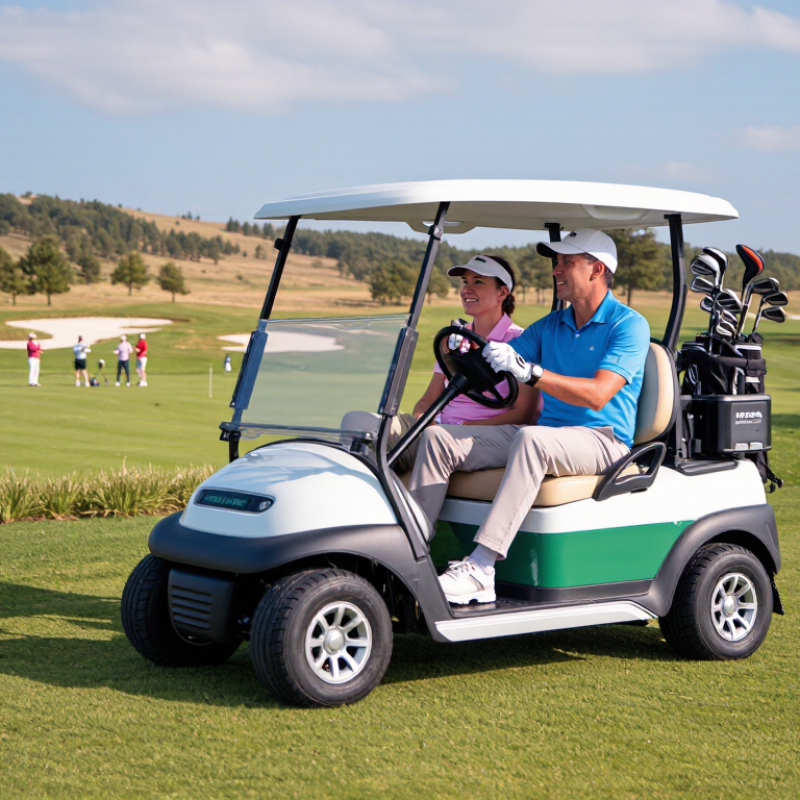
What Are Lithium Battery Golf Carts?
Lithium battery golf carts are low-speed electric vehicles powered by rechargeable lithium-ion battery packs. Unlike traditional lead-acid systems, they usually deliver steady voltage during driving. This means smoother hill climbing and fewer performance drops near the end of a trip. The battery pack also includes a battery management system, which monitors temperature, voltage, and charging conditions. Safety depends on proper design, installation, and maintenance.
Their popularity reflects wider battery development. The International Energy Agency reported that global electric-vehicle battery demand exceeded 750 GWh in 2023, rising about 40% from the previous year. The report also noted strong growth in lithium iron phosphate batteries, a chemistry often selected for durability and thermal stability. These figures do not measure golf carts directly. Still, they show why lithium technology is becoming more accessible.
In practical use, a lithium cart may carry passengers across a resort, warehouse, campus, or private property with less battery weight. Charging is often faster than lead-acid charging, and routine maintenance is simpler because there is no watering schedule. The U.S. Department of Energy identifies high energy density, efficiency, and cycle life as key lithium-ion advantages. However, lithium does not automatically mean better. Cold temperatures, poor chargers, incorrect retrofits, and neglected inspections can reduce service life. The label can mislead. A well-matched system matters more than marketing language.
| Category | Dimension | Typical Real-World Data | Why It Matters |
|---|---|---|---|
| What They Are | Battery technology | Rechargeable lithium-ion battery packs, commonly using lithium iron phosphate (LiFePO4) chemistry. | They store electrical energy in a lighter, more compact package than traditional lead-acid battery banks. |
| Tip 1 | Check voltage compatibility | Many golf carts use 36-volt or 48-volt electrical systems. The battery voltage must match the cart, motor, controller, charger, and wiring requirements. | Confirm the cart’s electrical specifications before purchasing. An incompatible battery can reduce performance or damage components. |
| Tip 2 | Compare usable energy | Energy is measured in watt-hours or kilowatt-hours. For example, a 48-volt, 100-amp-hour battery stores about 4.8 kWh before accounting for operating limits. | Comparing only amp-hours can be misleading when batteries have different voltages. Watt-hours provide a clearer comparison of stored energy. |
| Tip 3 | Estimate driving range | A typical lithium-powered golf cart may travel approximately 25–50 miles per charge, depending on battery capacity, terrain, speed, passenger load, temperature, and driving style. | Use the manufacturer’s test conditions as a reference, not a guarantee. Hills, heavy loads, soft ground, and high speeds can significantly reduce range. |
| Tip 4 | Understand charging time | Many lithium golf-cart batteries can recharge in roughly 3–6 hours with a compatible charger. Actual time depends on battery size, state of charge, charger output, and temperature. | Faster charging supports frequent daily use. Always use a charger designed for the battery’s chemistry and voltage. |
| Tip 5 | Consider service life | Quality LiFePO4 batteries are often rated for about 2,000–5,000 charge cycles, while conventional lead-acid batteries commonly provide fewer cycles under similar conditions. | A longer cycle life can reduce replacement frequency, although real service life depends on depth of discharge, heat, charging practices, storage, and maintenance. |
| Tip 6 | Evaluate weight savings | A lithium battery system can weigh substantially less than a comparable lead-acid bank; the exact reduction varies by cart design and required energy capacity. | Lower weight can improve acceleration, handling, tire wear, hill performance, and energy efficiency. The cart’s load rating should still be observed. |
| Tip 7 | Review maintenance and safety | Lithium batteries generally do not require watering or regular electrolyte checks. A battery management system typically monitors voltage, temperature, current, and charging conditions. | Maintenance is simpler, but correct installation, ventilation requirements, protection from physical damage, and use of the approved charger remain essential. |
| Cost & Ownership | Upfront price versus long-term value | Lithium systems usually cost more initially than lead-acid replacements, but lower routine maintenance, reduced weight, improved efficiency, and longer cycle life may lower total ownership cost. | Compare the complete system cost, including the battery, charger, installation, warranty, expected cycle life, and possible electrical upgrades. |
| Best Use | Suitable applications | They are well suited to frequent recreational use, residential communities, resorts, facilities, and other applications requiring repeated charging and consistent performance. | Lithium is especially attractive when users value reduced maintenance, quick turnaround between uses, and predictable performance. |
It is a low-speed electric vehicle powered by a rechargeable lithium-ion battery pack. The pack includes a management system that monitors temperature, voltage, and charging. Safety still depends on correct installation and maintenance.
Their lighter weight can improve acceleration and reduce stress on tires and suspension. Voltage usually stays steadier during a trip. The cart may climb the final hill with less hesitation.
They can provide useful range from a lighter, energy-dense pack. Actual range depends on load, terrain, temperature, speed, and battery capacity. Advertised capacity can hide practical limitations.
Not automatically. A lighter battery may improve response and hill climbing. The motor, controller, gearing, tires, and vehicle settings still limit speed.
They often charge more efficiently than lead-acid systems. Use only a charger matched to the battery and cart. Incorrect charging settings can shorten battery life.
Park it in a cool, dry place, especially after driving in strong sunlight. Recharge after use instead of leaving it nearly empty for days. Keep plugs and connections clean and dry.
Excessive heat, cold charging, overloads, deep discharge, and poor installation can reduce service life. Avoid steep hills with heavy loads. Small habits matter.
Watch for shorter range, unusual charging behavior, warning lights, or sudden performance loss. Loose connections may create heat. Stop guessing and ask a qualified technician to inspect the system.
No. The voltage, charger, capacity, weight, and management system must match the cart. A cheaper or lighter pack may still perform poorly. The label can mislead.
Lithium battery golf carts are becoming a popular choice for golfers, communities, and other users who want efficient, dependable transportation. Unlike carts powered by traditional lead-acid batteries, they use lightweight lithium batteries that can deliver steady power and support quicker charging. This can improve acceleration, help maintain performance as the battery drains, and make everyday use more convenient. These advantages help explain why are lithium battery golf carts becoming popular among people seeking a practical alternative for short trips and recreational travel.
Before choosing a cart, consider its range, passenger and cargo needs, charging options, terrain, and total ownership costs. Check that the battery and charger are compatible with the cart, and review the manufacturer’s care instructions. To maximize battery life, use the recommended charger, avoid leaving the battery fully depleted for extended periods, and store the cart in a dry place with moderate temperatures. Regularly checking connections, tires, and other cart components can also help keep the vehicle safe and reliable.

 Sarr Golf